When it comes to scuba diving tips that truly make a difference, mastering your buoyancy stands out as one of the most important skills you can develop. It’s not just about looking graceful underwater—good buoyancy control is essential for safety, protecting delicate marine ecosystems, and capturing clear, steady images for photography or video. Whether you’re a beginner or aiming to refine your technique, understanding and improving your buoyancy is a key step in becoming a more confident and responsible diver.
Table of Contents
1. Scuba Diving Tips: Safety
- Staying neutrally buoyant helps avoid dangerous buoyancy emergencies—such as rapid uncontrolled ascents or struggles to ascend when under‑weighted. Both pose serious risks to diver safety.
- Proper weighting means you should be able to float at eye level with an empty BCD while holding a normal breath. You shouldn’t sink like a stone when you exhale—but if you can’t descend slowly and naturally, you’re likely underweighted. It’s essential to perform a weight check every time you enter a new body of water. Changes in salinity, wetsuit thickness, or even equipment configuration can all impact your buoyancy and necessitate adjustments.
- Good trim leads to reduced drag and less effort swimming through the water. For example, a common 15° head‑up angle can increase drag up to 50%, leading to increased air consumption and fatigue.
2. Scuba Diving Tips: Protecting Marine Life
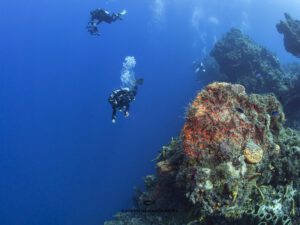
- Precise buoyancy allows you to hover effortlessly above fragile corals, grasses, and sea creatures—preventing accidental damage or stirring up sediment.
- Maintaining a horizontal, slightly head‑down posture reduces fin strikes and silting, helping preserve delicate ecosystems. It is also good to learn how to do the frog kick.
- Minimizing unnecessary movement or air release into the water helps reduce disruption to the environment and ensures marine life remains undisturbed.
3. Scuba Diving Tips: Underwater Photography & Videography
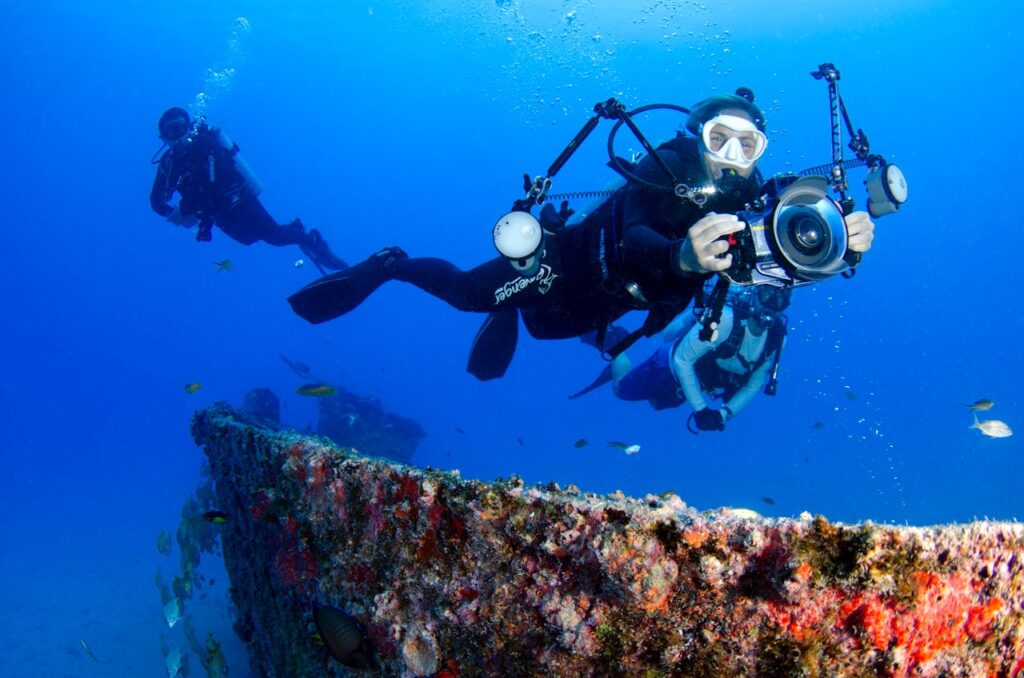
- When neutrally buoyant, you become a stable platform. You can hover without kicking or inflating your BCD, enabling smooth, steady shots.
- Breath control allows subtle vertical adjustments—perfect for fine‑tuning camera framing without disturbing marine life or kicking up sand.
- Maintaining trim reduces movement and drag, keeping your shot steady and your air consumption low.
- It is strongly recommended that divers not attempt underwater photography or videography until they have completed at least 50 dives and the PADI Peak Performance Buoyancy Specialty. Without these foundational skills, divers risk damaging coral, stirring up sediment, and missing photographic opportunities due to poor stability or buoyancy control. Novice divers also increase their risk of not paying attention to their air gauge, which can lead to running out of air or becoming dangerously low, leaving insufficient air for a proper safety stop.
- To further prepare for responsible and environmentally friendly diving practices, we also recommend completing the Green Fins Scuba Diver e-course online. This short course helps divers understand how to minimize their impact on marine life—especially when carrying a camera or additional gear.
4. Top Scuba Diving Tips: Mastering Buoyancy Control
- Master your breathing: Inhale slowly to rise, exhale slowly to sink. Use your lungs—not your inflator—to make minor depth adjustments.
- Dial in your weighting: Do a buoyancy check before diving. You should float at eye level with an empty BCD while holding a normal breath. Add or remove weights until this is achieved.
- Adopt a horizontal position: Streamline your body to reduce drag and move efficiently through the water. Keep your hands still and close to your body.
- Trim your system: Adjust where your weights and gear are placed to help maintain a balanced, horizontal position.
- Use your BCD sparingly: Only make small adjustments, and avoid overinflation. Your lungs are your most precise buoyancy tool.
- Stay calm and relaxed: Stress affects your breathing and buoyancy. Slow, steady breathing promotes control and helps conserve air.
5. Scuba Diving Tip: Increasing Your Dive Skills
You may wonder whether there is a significant difference between PADI Open Water Divers and Advanced Open Water Divers. There is! Improving your PADI skills and certification qualifications increases your confidence across a wide range of dive scenarios. One of the best ways to improve your buoyancy is through the Peak Performance Buoyancy Specialty, which many choose to complete as part of the five specialty courses in the advanced course.
This specialty focuses specifically on:
- Fine-tuning weight distribution and gear setup
- Improving your trim and body positioning
- Practicing controlled hovering
- Learning precise breath control techniques
These lessons help you:
- Use less air per dive by improving efficiency
- Move smoothly without disturbing sand, coral, or marine life
- Capture better photos and video through steadier positioning
- Prepare for more challenging dives like deep, wreck, and drift diving
Call to Action: Dive Better and Dive Smarter
Ready to take your diving to the next level? Start putting these scuba diving tips into practice—begin with your breathing, trim, and weight distribution on every dive. Ask your divemaster for help and advice. Then go further: enroll in the PADI Advanced Open Water Course and add the Peak Performance Buoyancy Specialty to your dive education. You’ll dive more efficiently, dive deeper, protect the reef, and enjoy every moment underwater even more.
Join us at Sand Dollar Sports in Cozumel to explore world-class dive sites while mastering your buoyancy and building lifelong dive skills. Book your next dive or scuba course today!